Wednesday, May 1, 2024

Commentary for April, 2024

Hello all - we hope you had a nice April.  

After a steadily rising market since November, the markets finally broke lower this month.  The Dow fell 5.0%, the S&P 500 lost 4.2%, and the Nasdaq, which has a higher concentration of tech stocks, was lower by 4.4%. 


Here’s a look at how the markets moved this month:


Here’s a look at how the various sectors performed:
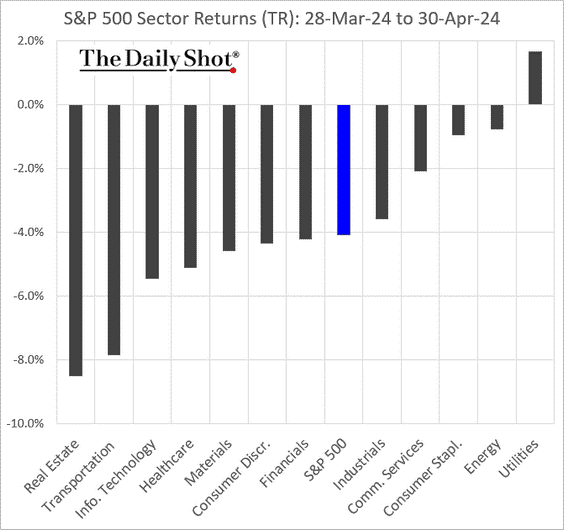


As we mentioned earlier, the market has seen a steady rise since November of 2023, trading in a narrow, upward sloping range.  Unfortunately, when trading in a narrow range like this, the trend is usually broken to the downside.  That’s what we saw this month. 


We’re also seeing the bigger stocks become bigger, and they are becoming more of the index.  The top-10 biggest stocks in the S&P 500 now account for about 34% of the entire index.  This is the highest concentration since the 1970’s.  

This is a problem because concentrated markets are less stable and prone to bigger moves like we saw this month.


____


APRIL DECLINE

What was the reason for the decline in the markets this month?  

We believe most of the gain in recent months has been due to the Fed as they appeared less likely to lower interest rates.  

Some analysts were expecting six to eight rate cuts this year.  However, economic data has made this less likely.  Economic growth has been positive, though slowing, and inflation has remained high.  This is often referred to as ‘stagflation,’ and its one of the worst environments to be in.  

Several Fed presidents made public comments this month that they see the possibility of just one rate cut this year – or even none at all.  This is quite a change from the 6-8 predicted just a few months ago.  

This, we believe, is the reason for the decline in stocks this month.


____

CORPORATE EARNINGS

We’re about halfway through the corporate earnings reports for the first quarter.  

The results haven’t been that bad – there have been some very positive reports, and some very negative.  Most reports leaned to the positive side and we’re on track to see earnings growth of about 3.5% and revenue looks to be growing at about 4.0% according to Factset.

Overly positive or negative reports did see those stocks move on the results, but overall, we don’t think these reports had much responsibility for the direction of stocks this month.  If anything, they muted some of the decline.  


____

INFLATION

Inflation is a key economic metric the Fed follows, which is why we discuss it first.  Inflation had been trending lower over the last two years, which was why investors believed the Fed will start lowering rates soon.  

However, the inflation level seems to have stalled over the last several months and rate cuts are looking less likely.


While you can see a large decline in inflation in the chart above, that’s looking at it from an annual perspective.  If you were to look at inflation month-by-month, prices continue to rise every month. 
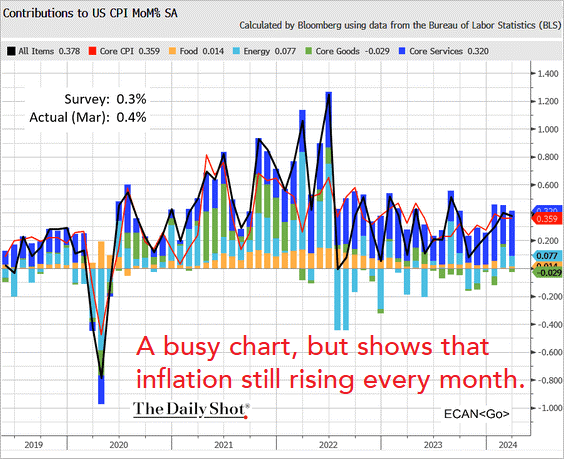


Excluding energy and food, which economists call the “core” measurement, inflation is still solidly rising every month.


The PPI, which is the inflation at the business level before they pass on the price increases to us, showed another increase last month.


____


OTHER ECONOMIC DATA

Economic data released this month was mixed.  Overall, the economy still looks healthy, but there are pockets of concern.  

We’ll start with the GDP report for the first quarter, which showed the economy still growing, though at a slower pace. 


A lot was made of this report.  Some analysts looked at it and said growth was slowing and it’s a bad sign.  Others would say it’s a positive because we’re still expanding and have defied the critics who forecasted a recession.

Both are true.  The economy is growing as people continue to spend.  But we are concerned about this spending.  

We all know the cost of everything has risen. In some cases, by a lot.  We think much of this spending is people trying to keep up with the price increases as they buy the things they need.  Many people cannot afford the price increases and credit card usage is rising, and credit card defaults are also rising.  

Credit card defaults often rise before and during recessions, so this is a good indicator to keep an eye on for the health of the economy.


Next, we’ll look at the leading economic indicators, which we’ve talked about for many months.  This index combines many other indicators that tend to signal the direction of the economy (like weekly unemployment numbers, building permits, etc.).  

This index had been lower for 22-straight months now, but it finally turned higher last month.  Unfortunately, it turned lower again this month.  This is another good recession indicator, so it is something to keep an eye on, too. 


Here are the various indicators used in the leading indicator index:


The manufacturing sector of our economy has turned the corner and is no longer contracting (a number below 50 indicates contraction).  The services sector is expanding, but it took another turn lower last month.


Retail sales saw a nice improvement last month:


Durable goods (these are items with a longer life, like a phone or refrigerator) also moved higher.


Consumer confidence dropped again last month:


Small business optimism was lower again, too:


____


Where does the market go from here?

The market hit oversold levels this month, which indicated a good time to buy (from a shorter-term perspective).  The rally did appear, but it didn’t last long before another downturn at the end of the month.  

News from later this week will give us a better idea on the direction of the market, with the Fed making comments later today, and employment reports at the end of the week.  Inflation reports will also be important to keep an eye on.  Positive economic reports and tougher talk from the Fed will keep sending the markets lower. 


This commentary is for informational purposes and is not investment advice, an indicator of future performance, a solicitation, an offer to buy or sell, or a recommendation for any security. It should not be used as a primary basis for making investment decisions. Consider your own financial circumstances and goals carefully before investing. Past performance cannot guarantee results.

Friday, March 29, 2024

Commentary for March, 2024

Hello all - we hope you had a nice March.  

The month was another solid one for stocks, with all major markets closing at or near record highs.  For the month, the Dow rose 2.1%, the S&P 500 gained 3.2%, and the Nasdaq, which has a higher concentration of tech stocks, added 1.8%.  

This also marked the end of the first quarter in 2024, which was the best start to the year since 2019.


Here’s a look at how the markets moved this month:


The market has seen a steady rise since November of 2023.  Interestingly, it has traded in a narrow, upward sloping range as you can see in the image below. 


We’ve seen the markets trade in a range like this often in recent years as investors focus on the central banks and their stimulus program.  The chart below shows the steady rise of the markets from 2020-2022.  It feels like we are in that same environment right now.   


____


FED

The Fed was a big topic this month as Fed chief Powell appeared before Congress and the Fed held another policy meeting.  There wasn’t a lot new discussed, but the market saw that as a good sign and rallied on the lack of bad news.  

Late in the month, though, several regional Fed presidents discussed how economic data like inflation was still high, and they were hesitant to cut interest rates too soon.  The markets didn’t really react on the news, but we think this is something to pay attention to.  From everything we’ve seen and heard, we don’t think the cuts will be as soon or as big as investors think.  The eventual realization could set the market up for a disappointment and send stocks lower.


____

INFLATION

Inflation is a key economic metric the Fed follows, which is why we discuss it first.  Inflation has been trending lower over the last two years, which is why investors believe the Fed will start lowering rates soon.  

However, the inflation level seems to have stalled over the last several months.  


While you can see a decline in inflation in the chart above, that’s looking at it from an annual perspective.  If you were to look at inflation month-by-month, prices continue to rise every month. 


Excluding energy and food, which economists call the “core” measurement, inflation is still solidly rising every month.


The PPI, which is the inflation at the business level before they pass on the price increases to us, showed a strong increase last month.


____


OTHER ECONOMIC DATA

Economic data released this month was mixed.  Overall, the economy still looks healthy, but there are pockets of concern.  

First, we’ll look at the leading economic indicators, which we’ve talked about for months.  This index combines many other indicators that tend to signal the direction of the economy (like weekly unemployment numbers, building permits, etc.).  

This index had been lower for 22-straight months now, but it finally turned higher this month!  It had never gone this low for this long without a recession following, but it’s possible this will be the first time.  Only time will tell.  


Here are the various indicators used in the leading indicator index:


The manufacturing sector of our economy still appears to be contracting (a number below 50 indicates contraction), and took a turn lower last month.  The services sector is expanding, but it also took a turn lower last month.


Retail sales saw a nice improvement last month:


Durable goods (these are items with a longer life, like a phone or refrigerator) also turned higher.


Consumer confidence dipped slightly last month:


Small business optimism was slightly lower, too:


____


Where does the market go from here?

Our indicators show that the market remains very expensive here.  But it remains resilient, too.  We wouldn’t be sellers at this time, but aren’t excited about putting new money in, either. 


This commentary is for informational purposes and is not investment advice, an indicator of future performance, a solicitation, an offer to buy or sell, or a recommendation for any security. It should not be used as a primary basis for making investment decisions. Consider your own financial circumstances and goals carefully before investing. Past performance cannot guarantee results.

Friday, March 1, 2024

Commentary for February, 2024

Hello all - we hope you had a great February.  

The month was another good one for stocks, with both the S&P and Nasdaq closing at record highs.  For February, the Dow rose 2.2%, the S&P 500 gained 5.1%, and the Nasdaq, which has a higher concentration of tech stocks, added a solid 6.1%. 


Here’s a look at how the markets moved this month:


Here’s a look at how the different sectors performed this month.


The market has seen a steady rise since November of 2023.  Interestingly, it has traded in a narrow, upward sloping range as you can see in the image below.


We’ve seen the markets trade in a range like this often in recent years as investors focus on the central banks and their stimulus program.  We’re seeing a calm, positive market again now as investors bet on the Fed lowering interest rates again in the coming months.  

____

NVIDIA

We don’t usually talk much about individual stocks in these commentaries, but this month was all about one stock.  Nvidia.

Nvidia is a tech company that makes special computer chips for AI programs.  The AI hype has given new legs to this market and Nvidia is by far the leader in this field.  They are so good at what they do that Microsoft spends one-third of their capex (“capital expenditures” are costs that will be used to improve a company's performance in the future) on Nvidia products.  

Anyway, investors have been looking for reassurance that the AI-driven rally would continue.  Earnings reported by Nvidia this month were extremely strong and that gave investors the reassurance they were looking for.  Stocks continued their rise.  

Here’s a look at the remarkable rise of Nvidia stock over the past five years:


____

FED

There wasn’t a lot of news out of the Fed this month (which was nice).  Early in the month they released the minutes from their latest meeting, which suggested that while they may lower rates this year.  However, it probably won’t be as much as investors expect.  

Investors continue to expect a big cut in rates from the Fed in the coming months.  From everything we’ve seen and heard, we don’t think the cuts will be as soon or as big as investors think.  This could set the market up for more disappointment as rate cuts never materialize.

____

INFLATION

Inflation is a key economic metric the Fed follows.  It has been trending lower over the last two years, which is why investors believe the Fed will start lowering rates soon.  

However, the inflation level seems to have stalled over the last several months.  


While you can see a decline in inflation in the chart above, that’s looking at it from an annual perspective.  If you were to look at inflation month-by-month, prices continue to rise every month.


Excluding energy and food, which economists call the “core” measurement, inflation is still solidly rising every month.


The PPI, which is the inflation at the business level before they pass on the price increases to us, showed a strong increase last month.   


____


OTHER ECONOMIC DATA

Economic data released this month was mixed.  Overall, the economy still looks healthy, but there are pockets of concern.  

First, we’ll look at the leading economic indicators, which we’ve talked about for months.  This index combines many other indicators that tend to signal the direction of the economy (like weekly unemployment numbers, building permits, etc.).  

This index has been lower for 22-straight months now.  It has never gone this low without a recession following, although this is something we’ve been saying for many months and a recession still hasn’t come.


Here are the various indicators used in the leading indicator index:


The manufacturing sector of our economy still appears to be contracting (a number below 50 indicates contraction), though it is improving.  The services sector showed an improvement, as well. 


Retail sales turned lower last month:


Durable goods (these are items with a longer life, like a phone or refrigerator) turned lower, but this was mostly due to large aircraft orders skewing the data.


Consumer confidence dipped last month:


Small business optimism was slightly lower, too:


____


Where does the market go from here?

Our indicators show that the market remains very expensive here.  But it remains resilient, too.  We wouldn’t be sellers at this time, but aren’t excited about putting new money in, either. 


This commentary is for informational purposes and is not investment advice, an indicator of future performance, a solicitation, an offer to buy or sell, or a recommendation for any security. It should not be used as a primary basis for making investment decisions. Consider your own financial circumstances and goals carefully before investing. Past performance cannot guarantee results.